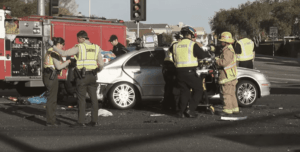
Did you get into a rideshare collision? While rideshare services have made it easier to access a convenient and reliable mode of transportation, rideshare drivers are prone to car crashes just as much as everyone else on the road.
In fact, there are even aspects that can increase the chances of rideshare drivers getting into a collision. At Omega Law Group Accident & Injury Attorneys, we know how overwhelming this can be, and we’re here to help you as your San Bernardino rideshare accident lawyer.
Our attorneys bring decades of combined experience to your case. You’re not alone; you can trust us to advocate for your rights as your San Bernardino car accident lawyer.
Understanding Insurance Coverage Periods in Rideshare Accidents
Rideshare accident claims differ from standard vehicle accidents due to the way insurance coverage is applied in these cases. In general, the coverage level that you can expect will depend on the driver’s status at the time of the crash.
Your San Bernardino personal injury lawyer can give you more information regarding the insurance policies and coverage levels that apply in your case. In the meantime, here’s how insurance typically works in rideshare accident cases:
Driver Offline
When a rideshare driver is not logged into the Uber or Lyft app, they are considered off-duty. In this scenario, the driver’s personal auto insurance is the only coverage that applies. If a car crash occurs at any point during this period, the rideshare company will usually not offer any liability coverage.
App On, No Ride Accepted
If the driver is logged into the app and they are available to accept a ride but haven’t been matched with a passenger yet, California law requires rideshare companies (or “transportation network companies”) to provide third-party liability insurance coverage.
This type of insurance must offer the following coverage levels at a minimum:
- $50,000 for bodily injury per person
- $100,000 for bodily injury per accident
- $30,000 for property damage
This coverage is designed to act as excess insurance. In response, the driver’s personal insurance will serve as the primary form of coverage for auto accident injuries, but the rideshare policy will also go into effect if the driver’s insurance doesn’t cover the extent of your expenses.
Ride Accepted or Passenger Onboard
When a driver has either already accepted a ride or is currently transporting a passenger to their destination, rideshare companies often extend commercial liability insurance. This typically has higher limits than other coverage options.
Here’s what it usually entails:
- $1 million in third-party liability
- Uninsured/underinsured motorist bodily injury coverage
- Contingent comprehensive and collision coverage in some cases
Common Causes of Rideshare Accidents in San Bernardino
Several factors often contribute to rideshare-related crashes:
- Driver fatigue: Many rideshare drivers work long hours or drive for multiple platforms to maximize their income, which may increase the risk of fatigue-related crashes.
- Distracted driving:Navigation apps, rideshare platform notifications, and conversations with passengers can distract drivers while behind the wheel.
- Unfamiliar roads: Drivers unfamiliar with certain areas of San Bernardino might miss turns or make sudden maneuvers, confusing other drivers on the road and causing collisions as a result.
- Traffic congestion: Busy intersections and freeway congestion create more opportunities for collisions.
- Impaired driving: Although rare, some rideshare accidents occur due to drug or alcohol impairment by the driver or another motorist.
Liability in Rideshare Accidents
Establishing liability in a rideshare crash depends on who was at fault and what role each party played in the collision. That said, here are some examples of potentially liable parties:
- The rideshare driver
- Another non-rideshare motorist
- A pedestrian or bicyclist
- Vehicle manufacturers, if a mechanical failure occurred
- Government entities for dangerous road conditions
Generally, an entity is liable if it displayed negligent behavior and caused an accident. For instance, texting and driving is negligent because it creates unnecessary risk and enhances the chances of a traffic collision.
Since rideshare drivers aren’t employers, you generally can’t sue the rideshare company under the rules of vicarious liability. However, you may be able to directly sue the rideshare company if their negligence contributed to the accident; an example might be hiring a driver with a history of DUIs.
Types of Damages in a Rideshare Accident Case
Victims of rideshare accidents may be entitled to recover a wide range of damages under California personal injury law, including:
- Medical expenses for hospitalization, surgery, and therapy
- Future medical costs and treatment
- Lost wages, including future loss of earning capacity
- Pain and suffering or emotional distress
- Property damage
- Loss of consortium for family members in wrongful death cases
In more serious or even fatal accidents, surviving family members may be eligible to pursue a wrongful death claim against ridesharing services for funeral costs, loss of companionship, and other means of financial support.
Since California is a comparative negligence state, multiple parties can share liability. For example, if a rideshare passenger is injured in a crash where the Uber driver was 60% at fault, and the other driver was 40% at fault, compensation would be adjusted accordingly.
Injured in an accident?
Our personal injury lawyers in San Bernardino are here to help.
 (310) 526-8383
Evidence Collection in Rideshare Accidents
The strength of your legal claim is directly dependent on the quality of evidence you have. One of the biggest spots where claims falter is that the victim doesn’t present enough proof. Below are some common types of evidence that you’ll want to solidify your claim:
- Accident scene photos
- Video recordings (e.g., surveillance footage, traffic camera footage, cellphone recordings, etc.)
- Medical records and medical documentation about your injuries
- Eyewitness accounts and police reports
- Expert testimony and accident reconstructionist data
The more evidence you have, the less likely insurance adjusters will be to question your version of events.
Have you been involved
in an accident?
(310) 526-8383
Statute of Limitations in California for Rideshare Accident Cases
The statute of limitations in California for filing a personal injury lawsuit is two years from the date of the accident. However, if the claim is against a government agency, such as in cases involving unsafe roads, your claim must be filed within six months of the incident instead.
It’s very important to take these deadlines seriously because missing them can mean forfeiting your legal right to seek compensation through civil litigation. However, some exceptions may apply, such as if the injured party is a minor or if the injury was discovered later.
In either case, the best option is to get started early. That way, your lawyer will have ample time to gather evidence and address insurance issues or contract disputes.
Reach Out to Our Rideshare Accident Lawyers in San Bernardino Today for More Information
If you or someone you care about was hurt in a rideshare accident, know that you don’t have to deal with the aftermath on your own. It’s completely normal to feel overwhelmed. There’s a lot to process emotionally, physically, and financially after all.
However, you’re not expected to handle it all by yourself. That’s where Omega Law Group comes into the picture. Our San Bernardino rideshare accident attorneys are ready to stand by your side, fight for your rights, and help you pursue full compensation for your losses. We also work on a contingency fee, so if we don’t win, you don’t have to pay us.
You don’t have to wait to get support. The sooner you reach out to our San Bernardino rideshare accident law firm, the sooner we can sit down with you, get to know the details of your case, and start working toward holding the responsible parties accountable. Call now.